
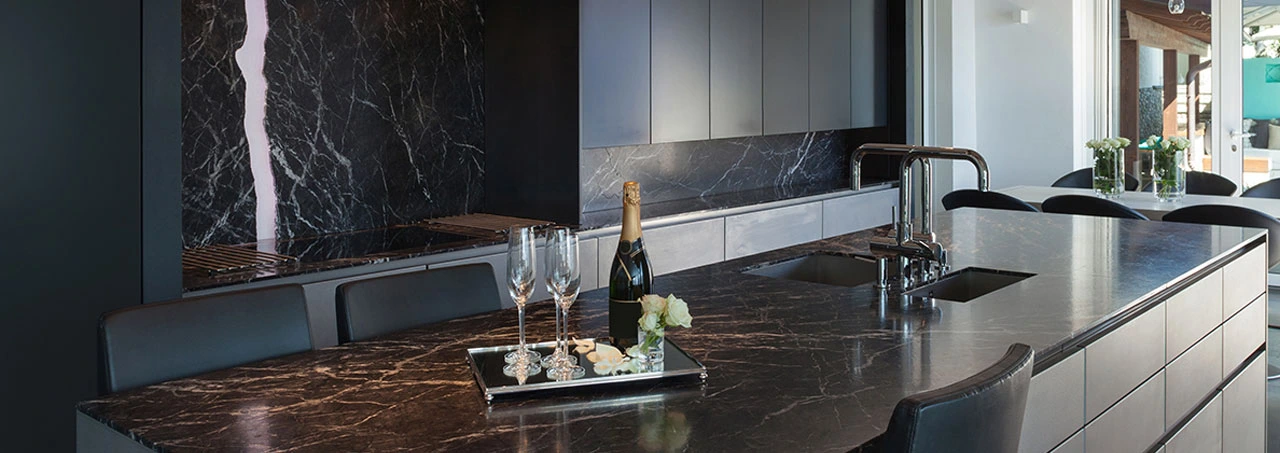
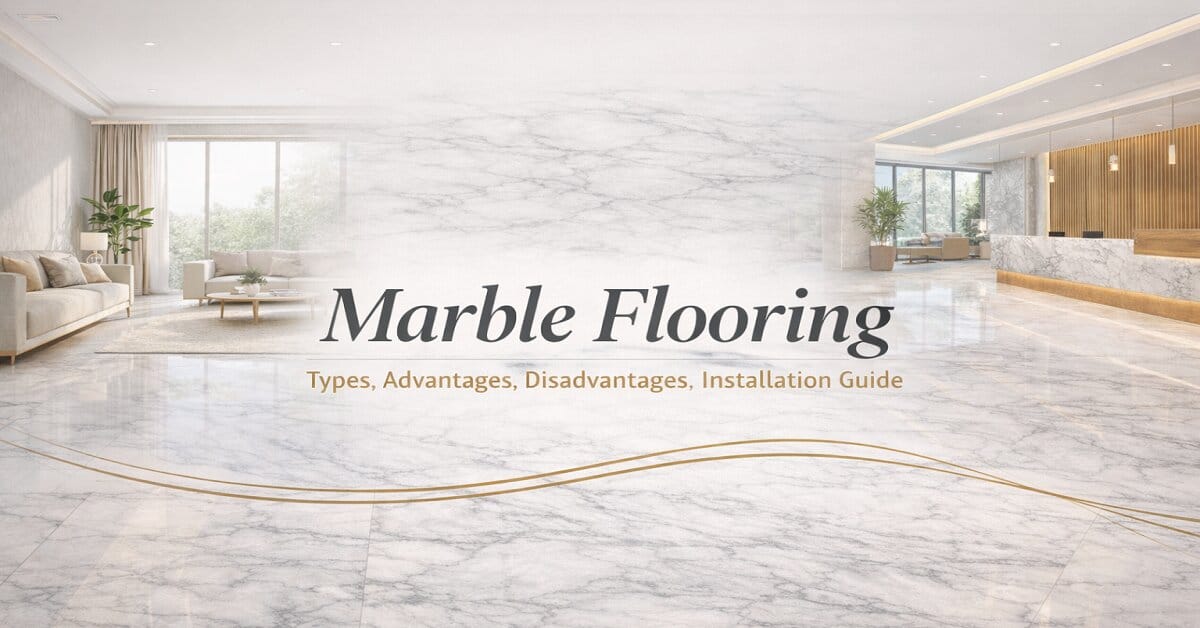
Marble flooring is often described as an elegant and beautiful option in structures. From ancient palaces to today’s real estate projects, marble is a favorite flooring material for its natural designs and excellent durability. It reflects light, instantly enhancing the appearance of any venue with its polished surface.
Marble can be used in living rooms, bedrooms, kitchen areas, and even commercial areas due to its different colors, textures, and patterns.
Meaning and Importance of Marble Flooring
Marble flooring involves installing natural stone on floors, resulting in smooth, elegant surfaces. Since marble is a natural rock, a mixture of limestone that has undergone pressing and heating under high pressure, the pattern and texture of each slab differ.
Marble flooring is a major factor in enhancing the aesthetics and value of homes in contemporary interior design. Most architects recommend flooring marble for Indian homes, as it does not fail in hot environments and provides an inherent cooling effect.
Types of Marble Flooring Used in Flooring
Marble flooring may be classified broadly into Indian marble and imported marble. Each type has different characteristics, colors, and price ranges.
A. Indian Marble Flooring
Indian marble is widely used because it has a long lifespan, is inexpensive, and is readily available. It is mined in different parts of the country, particularly in Rajasthan.
These stones are known for their strength and traditional appearance. Most homeowners prefer to purchase from Kishangarh marble suppliers because these suppliers offer a wide range of high-quality marble slabs suitable for flooring.
B. Imported Marble Flooring
A luxurious look and design distinguish the imported marble. It is imported from Italy, Greece, Turkey, and Spain. One of the most popular models to be used by luxurious homeowners is the imported Michelangelo marble in soft Grey veins on white. This is a luxury marble commonly applied in villas, hotels, and designer houses.
More expensive than Indian marble is Imported white marble, offering exclusive styles that are difficult to achieve with other materials.
C. Popular Marble Flooring
Marbles come in several varieties and are widely used as flooring materials due to their durability and appearance. Among the popular ones are the following:
- Makrana Marble: This is of pure white color and was formerly used.
- Italian Marble: Italian marble is a luxury material with a smooth surface.
- Statuario marble: It is heavy, grey veined upon white.
- Botticino Marble: It offers a cozy beige shade that suits contemporary houses very well.
- Carras marble: A common marble that is used in elite architecture.
These types allow homeowners to choose the flooring that suits their interior design and budget.
Best Marble Flooring Installation Process
The process normally has a series of steps:

- Surface Preparation
The ground floor should first be washed and evened before laying marble slabs.
- Layout Planning
Workers plan the arrangement of marble pieces to maintain the same patterns and reduce cutting.
- Mortar Application
The floor is covered with an even layer of cement or adhesive mixture to fix the marble slabs in place.
- Marble Placement
Marble pieces are arranged systematically to maintain uniform spacing.
- Polishing and Finishing
After installation, the surface is polished into a smooth, shiny finish that reveals the natural patterns.
It must be properly fitted to prevent cracks, uneven surfaces, or moisture-related damage.
Marble Flooring vs Tiles vs Granite
| Feature | Marble Flooring | Tiles | Granite Flooring |
| Appearance | Luxurious and elegant with natural patterns and unique veins | Available in many colors, textures, and designs but patterns are artificial | Natural stone with a strong, bold look, usually darker shades |
| Durability | Durable but requires proper care and sealing | Durable and resistant to normal wear | Extremely strong and highly resistant to scratches |
| Maintenance | Should be polished and sealed regularly to keep shiny | Minimal maintenance and cleaning | Needs very little maintenance as compared to marble |
| Installation | Professional installation and polishing are required | Simple and quicker set up | Skilled labor on installation because of heavy stone slabs |
| Cost | Typically, costly based on the type of marble | Cheap and economical | Mid-priced based on quality |
| Best For | Luxury interiors, bedrooms and living rooms | Budget-friendly homes, kitchens, and bathrooms | Busy locations like corridors, staircases and business areas |
Advantages of Marble Flooring
Marble flooring offers several advantages that have made it popular among homeowners and architects.
- Elegant Appearance – Marble adds a classic, expensive touch to interiors.
- Durability – Marble flooring will last for decades with appropriate care.
- Natural Cooling Effect – Marble is cool and suitable for hot climates.
- Unique Patterns – Every slab has a different pattern, making the flooring distinctive.
- Increases Property Value – Homes with marble flooring often have a higher market value.
Disadvantages of Marble Flooring
Marble flooring has limitations, even though it offers benefits.
- High Cost – High-quality marble materials may be more costly than other flooring materials.
- Maintenance Requirements – Marble will need occasional cleaning and periodic polishing to stay shiny.
- Porous Nature – Marble can absorb liquids and get stained unless it is sealed.
- Slippery Surface – Marble is quite smooth and, hence, can be dangerous when wet.
Conclusion
Marble flooring is one of the most brilliant and robust flooring materials in homes and offices. It is naturally beautiful, comes in a variety of colors, and has a long lifespan; hence, it is a favorite of homeowners who aim to create luxurious interiors.
Whenever choosing between Indian marble and high-quality imported types, one must select the right supplier, like Akar Marbles Industries, and ensure proper installation to achieve maximum output. With proper care and maintenance, marble flooring can make a property beautiful and add significant value over time.